
Understanding Labels on Fruit and Produce
The labels on fruit usually use PLU (price look-up) codes to help identify produce at checkout. These fruit and produce stickers help stores identify conventional and organic items, and the numbers can tell you useful information at a glance. The labels been used by supermarkets since 1990, and the International Federation for Produce Standards (IFPS) assigns them globally. While people often notice these labels on fruit, they can also appear on vegetables, herbs, and nuts.
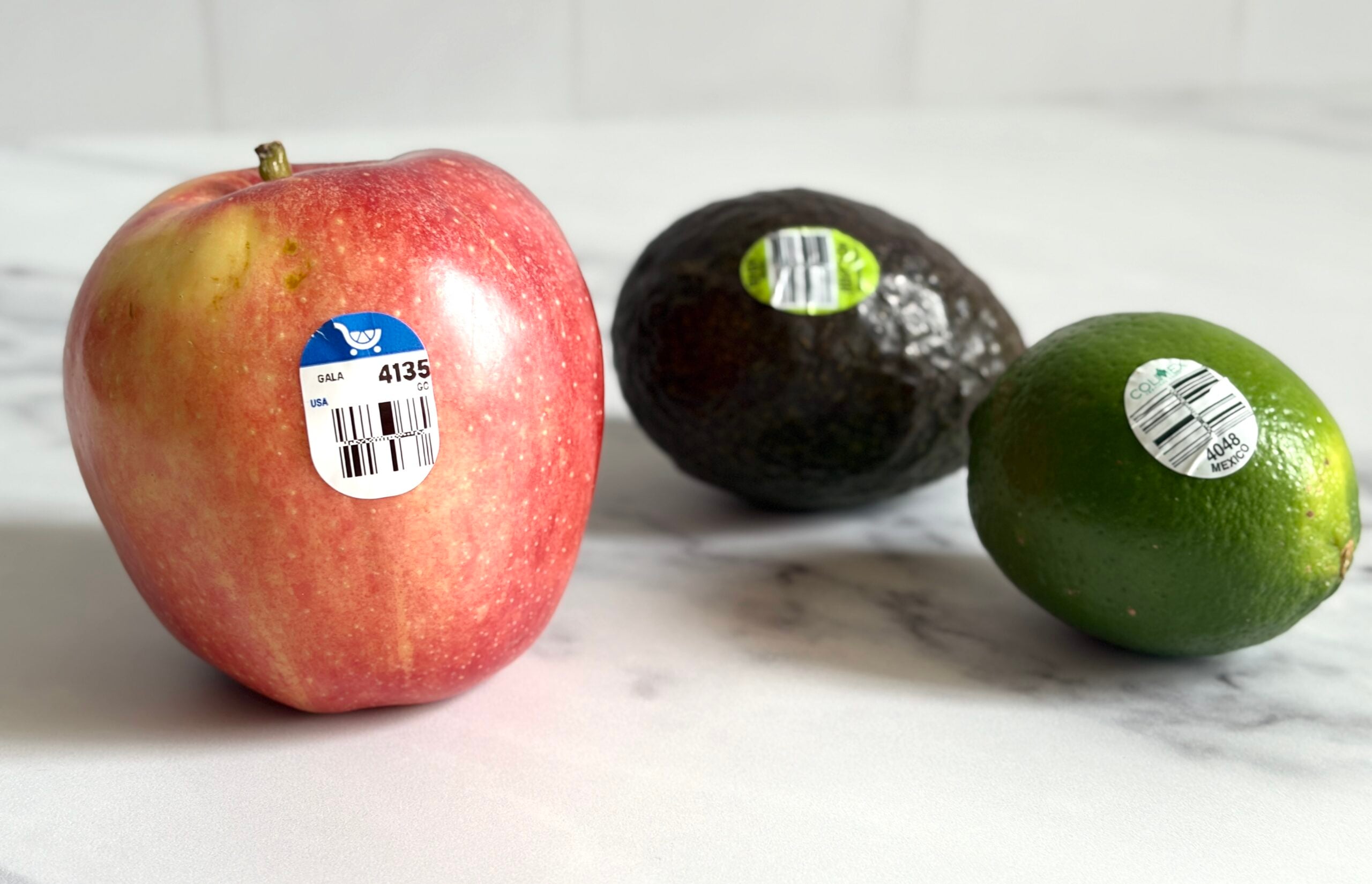
Fruit and Produce labels typically fall into 2 common categories:
- Conventional: A 4-digit PLU code usually identifies conventionally grown produce.
- Organic: A 5-digit PLU code starting with 9 usually identifies organic produce. In many cases, this is the conventional 4-digit code with a 9 added to the front.
Note: You may also see older claims that a code starting with 8 means genetically modified produce, but that information is outdated and not a reliable way to identify produce today.
Making Informed Choices: Pesticides, Environment, and Local Support
- Pesticides and Health: Conventionally grown produce may be grown with synthetic pesticides, while organic production has different standards. Many shoppers choose organic for personal or environmental reasons.
- Environmental Impact: Farming practices vary widely, so a produce sticker alone does not tell the full story of how a fruit or vegetable was grown.
- Local Farmers: Buying local can support nearby farms and may give you the chance to ask directly about growing practices.
EMPOWERING CONSUMER CHOICES:
As consumers, advocating for transparent food labeling can empower you to make informed choices. Some organizations and brands go beyond the basic labeling requirements, providing additional information about the fruit's origin, farming practices, and certifications. Supporting brands that prioritize transparency can be a way to encourage better information sharing within the industry.
By considering these factors, you can make food choices that align with your nutritional needs, environmental values, and support for local agriculture. Understanding the meaning of produce labels is an essential step in making informed decisions about the food you consume.
So, the next time you pick up a piece of produce, take a look at that little sticker. It might just reveal more about your food choices than you ever imagined.