
FOOD ADDITIVES
Many shoppers pay closer attention to food additives today as they read labels more carefully and try to better understand what is in packaged foods.
Food additives and flavorings are used in many packaged foods for different purposes, including preservation, sweetness, texture, color, and flavor. Some are widely accepted as safe under current regulations, while others remain controversial or are under ongoing review.
When possible, fresher foods often have simpler ingredient lists. However, many of us shop once or twice a week and store food for later use. Additives may be used to help preserve shelf life, maintain texture or color, improve flavor, or support food safety, depending on the product.
Food additives many consumers choose to limit include:
- Artificial sweeteners: Aspartame is one of the most debated low-calorie sweeteners Some health agencies have flagged limited concern at certain exposure levels, while FDA continues to consider approved uses safe within established limits.
- Artificial food dyes: Some artificial colors remain controversial, and rules vary by country. In the U.S., some dyes are still permitted, while others such as Red No. 3 are being phased out.
- High fructose corn syrup: A common added sweetener in many packaged foods and drinks.
- MSG (monosodium glutamate): A flavor enhancer that some people prefer to avoid, though FDA considers it generally recognized as safe.
- Sulfites / sulfur dioxide: Preservatives that can trigger reactions in some sensitive individuals, especially some people with asthma.
- Sodium nitrite / nitrate: Commonly used in cured meats.
- Potassium bromate: A dough additive that remains controversial and is not allowed in some places.
- BHA (butylated hydroxyanisole): A preservative used to slow spoilage of fats and oils; currently under FDA review.
How to Spot These Additives on Labels
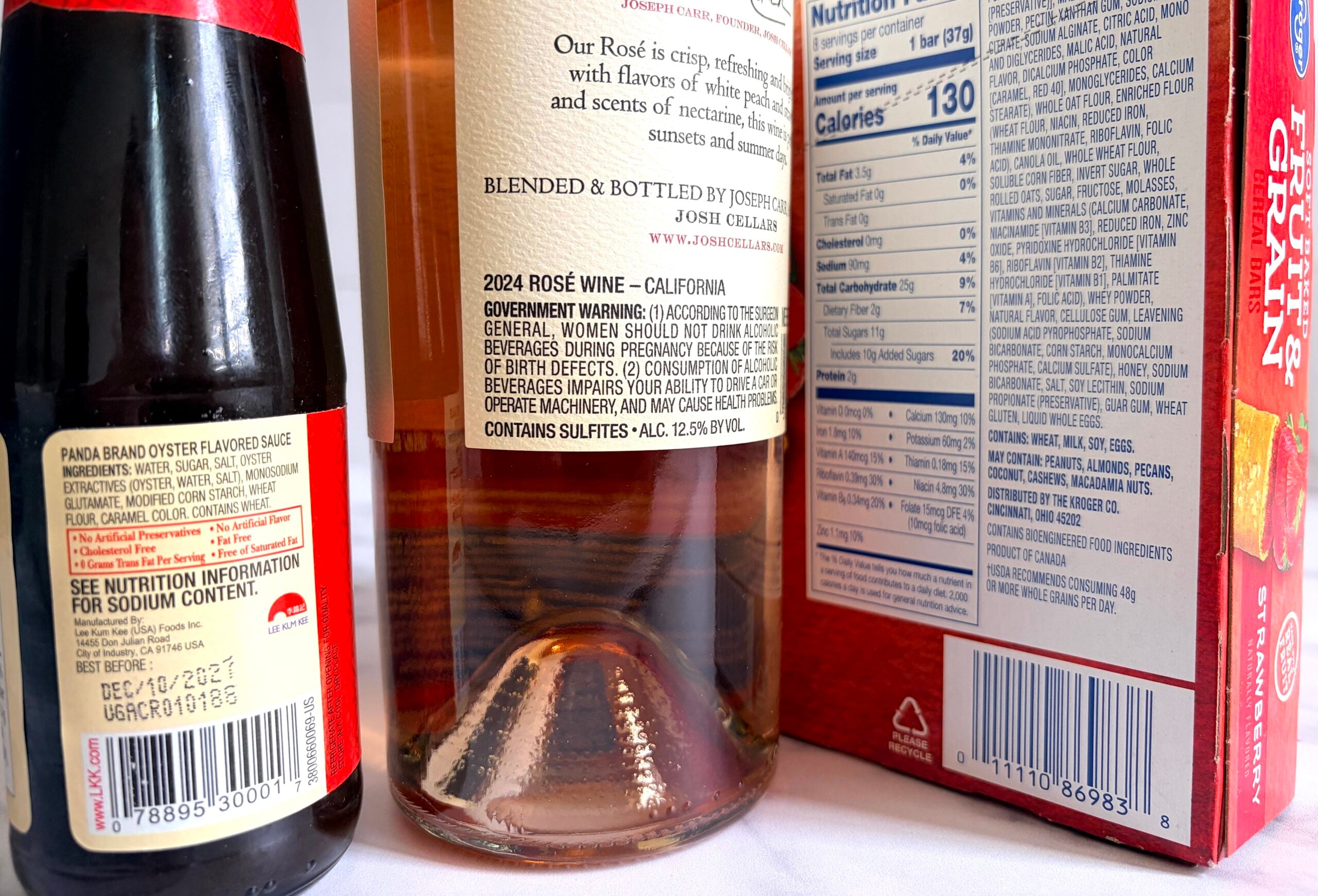
Read the ingredient list, not just the front of the package. In the U.S., ingredients must be listed in descending order by weight, and FDA-certified color additives must be listed by name, such as Red 40, Yellow 5, Yellow 6, Blue 1, Blue 2, or Green 3.
Know the common names. Some additives are easy to miss because they appear under ingredient names rather than broad categories. For example:
MSG: usually be listed as monosodium glutamate on ingredient labels.
Artificial colors: often listed by specific names like Red 40 or Yellow 5.
Dyes: candies, frostings, drinks, cereals, snack foods, and brightly colored processed foods.
Sulfites: wine and some dried or processed foods; wines sold in the U.S. generally must declare sulfites at 10 ppm or more, and usually disclosed with a statement such as "Contains Sulfites".
Nitrites/nitrates: cured meats such as bacon, ham, hot dogs, sausage, and deli meats. USDA/FSIS also notes that some “uncured” products may still use natural nitrite sources such as celery powder and must say something like “no nitrates or nitrites added except those naturally occurring…”
Simple Ways to Limit Food Additives
Choose shorter ingredient lists when possible.
Compare versions of the same product. One brand of yogurt, cereal, salad dressing, or cured meat may have fewer additives than another.
If you want to limit artificial food dyes, watch ingredient labels for names such as Red 40, Yellow 5, Yellow 6, Blue 1, Blue 2, and Red 3. Some synthetic dyes discussed in Europe are the same color additives used in the U.S., but they are often listed under different names. For example, Yellow 5 is Tartrazine in the EU, Yellow 6 is Sunset Yellow, and Red 40 is Allura Red. In Europe, some synthetic dyes are regulated differently, and certain colors require warning labels related to hyperactivity concerns in children.
For wine, check for “Contains Sulfites.”
For cured meats, read the ingredient list and the qualifier statement. “Uncured” does not always mean free of nitrite-related curing agents if natural sources are being used.
Cook more basic foods at home when practical, since whole ingredients naturally reduce exposure to many additives. This is more of a practical habit than a labeling rule, but it can help reduce reliance on packaged foods with longer ingredient lists.
Sources:
FDA: Questions and Answers on Monosodium glutamate (MSG)
FDA: Aspartame and Other Sweeteners in Food
TTB: Wine Labeling: Declaration of Sulfites
FSIS: Food Ingredients of Public Health Concern